
PART 3 -The Army
GENERAL. Official records relating to fitness training in the Army before and during the two World War eras are scarce. Much of the information that follows is primarily based on some research items and the recollections of a number of retired personnel as recorded in earlier issues of the former Trade/Branch newsletter and magazine called PERISCOPE (see Part 5). Due to the influence of the Swedish Gymnastics System, physical training was called gymnastics in the 1900s and the PT instructor was called a gymnastics instructor.
During this period several members of the British Army Gymnastic Staff, the predecessor of the British Army Physical Training Corps, were seconded to Canadian Militia units. Their influence, WW 1 and the desire for a national program resulted in the establishment of Bayonet Fighting and Physical Training Schools across Canada and caused our Army physical fitness and recreational training programs to be modeled after the British Army system.
During WW 1 these newly qualified Canadian instructors provided PT programs for Canadian units. In British PT Programs, bayonet fighting was still taught using spring bayonets until the early 1950s. According to casualty statistics, at least two members of the Canadian gymnastics staff became casualties.
In addition to conducting unit programs, some Canadian PTI's provided remedial PT for the injured and a few instructors were actually posted to hospitals. After the war this function was taken over by the Medical Corps. Until the late 1970s, Army PTI's were posted to NDMC in Ottawa as remedial specialists.
Some archival background on the role of Physical Training in World War 1 is found in the following: Excerpt From The Biography of Percy Nobbs (a renown Canadian architect):
“The architect's skill with pointed weaponry included the bayonet, an interest he had first acquired as a small boy enthralled by the bayonet fighting drill at the St. Petersburg garrison. He went to England when the Great War broke out to join the Northumberland Fusiliers, but relates that a bad eye caused him to be sent back to Canada where he took charge of the bayonet fighting and physical training program at Valcartier Camp in Quebec, subsequently organizing similar military training all over Quebec, Ontario, and Nova Scotia. Eventually Nobbs managed to get himself posted back to Europe as a camouflage expert with the Royal Engineers of the Imperial Forces in France. Here he created "two of the finest bits of camouflage work at the front [which concealed] Canadian Corps headquarters in what was practically No Man's Land during the open fighting. He attained the rank of major during his war service.”
Maj Nobbs must also have set up a school in BC as attested by the following certificate awarded to Sgt Corner (see Last Post) from the Bayonet Fighting and Physical Training School in Victoria BC, dated Feb 1917. John Saunders (see Last Post) qualified on a course held at Long Branch ON in 1917 and Billy Adkin (see Last Post) was an Instructor at one of these Schools during WW 1. (Note Billy's hat badge.)

Excerpt from Canadian War Records Office, Ministry of Information:
Not all military instruction revolved around weapons systems and tactics. Sport and physical exercise were also important; peak fitness was vital if soldiers were to function under the strain of battle. As the British Army Manual of Physical Training explained: a soldier should be well disciplined, a good marcher, intelligent, smart, active and quick, able to surmount obstacles in the field and capable of withstanding all the strains and hardships of active service. Fitness was achieved through physical drills, “Swedish” exercises and regular sporting events. Organized games and competitions not only fostered physical fitness, but also improved morale and encouraged teamwork. During the summer months, battalions, brigades and divisions organized their own sporting events in rear areas.
After the war a veteran fondly recalled a sports day from the summer of 1918: "Who lives that does not remember the day of brigade sports at Izel-les-Hameaux? There were races and jumps and hurdles, something for everyone, a ring to box and wrestle in, baseball and football championships. The day was fine... everybody was there. It was a gay scene, the boys of four battalions and the airmen who joined us for the fun, all rollicking together."
PERSONNEL. fter WW 1 the Canadian Bayonet Fighting and Physical Training Staff seems to have been dissolved and the Army had no designated PTI's. The responsibility for fitness training and the conduct of sports rested with the Platoon Commanders, Platoon NCO's and members still serving who had previous training with the British or with the former Bayonet Fighting and PT Staff. During the Second World War, some Army NCO's qualified as PTI's. at the British Army School Of Physical Training (ASPT) in Aldershot UK. Among them was WO2 Jim Grindley, who, because of his talent, was retained at the ASPT as the first and only Canadian Army PTI to be employed as a Staff Instructor at the ASPT (1942-45). In 1950 Regimental PTI's were recognized as a trade specialty at Group 2 and 3 levels within the recently approved military trade structure. Advance PT Courses were available only at the British APTC in the UK. A number of NCO's and a few officers were sent to the ASPT in Aldershot, UK to upgrade their qualifications. The following are known to have served as Staff Instructors at the PT Wing during this period; SSgts Fred Brown; KO Jones and George Verner; Sgt Buz Bexaire; Cpls Roger Martel and Bob Partridge and LCpls Ken MacDonald and Jack Savage.
PT WING. Established in 1946 in Camp Borden as a wing of the Royal Canadian School of Infantry (RCS of I) it was was located in a First World War gymnasium (Bldg T 93). Extra-regimentally employed officers and NCO's of the Infantry Corps filled all staff positions. In addition to providing the RCS of I infantry training courses with a PT and sports program, courses for Unit Sports Officers, Regimental Assistant PTI's and Unarmed Combat Training were conducted at the PT Wing.
In 1951 the PT Wing expanded across the road into an old H-Hut formerly used as a dependant’s primary school. This building accommodated the CO’s office, administrative offices, sports stores and lecture rooms. Between 1946 and 1954 selected Army officers and NCO's attended short specialty courses conducted at the PT Wing (RCS of I). After graduating, students returned to their units where the conduct of PT and organization of sports became their secondary duty.
ARMY PHYSICAL TRAINING CADRE. The PT Cadre was established in 1954. During 1955-58 selected tradesmen of any corps after having qualified as Gp 3 PTIs, were assigned for employment in established PT Cadre positions. After 1959 outstanding graduates of Gp 2 courses were also employed in PT Cadre positions. However, there was still no PE&R or equivalent officer corps or branch. Established PT Cadre officer positions were filled by extra-regimentally employed officers of any corps for a fixed tour of duty.
ARMY SCHOOL OF PHYSICAL TRAINING (ASPT). In 1958 the PT Wing (RCS of I) obtained school status and was known as the ASPT. That same year the ASPT was moved to the Buell Building, then a recently completed modern recreation complex. The Commanding Officer position was upgraded to Major rank level and Major RB Firlotte of the QOR of C assumed the position as the first CO with WO 1 Butch Goodey as the first School RSM. Undoubtedly the years 1955-1958 were a period of growth and image building for the new PT Cadre.

Shortly after Capt John Gillanders became the new Office-in-Charge of the PT Wing, the Army Gymnastics Display Team was born. The original team consisted of the PT Wing staff augmented by other Camp Borden PTIs and a number of students of the No 2 Advanced Course. Their debut was an impressive display with two daily performances at the 1955 CNE in Toronto. TVs Ed Sullivan and swimmer Marilyn Bell were the headliners of the show. During 1956-57 the Camp Borden based team performed dozens of gymnastic and swimming displays across Ontario and participated in several Toronto and Ottawa Sportsmen’s Shows. It also formed the Army complement of the Tri-Service Display Team whose performance was the highlight of the grandstand show that starred Bob Hope during the 1957 CNE in Toronto.
When the original members of the team were posted to new locations, they began to form their own teams. Between 1958 and 1966 the functional and busy teams were located at Gagetown, Kingston, Borden, Winnipeg and Edmonton. Their performances contributed substantially to the enhancement of the image of Army PTIs and the PT Cadre. Some of the original members of the first CFB Borden Team and many of the younger PTIs whom they trained formed the core of the CF Tri-Service Team that gave more than 100 performances during a cross-Canada tour in 1967 as part of Canada’s Centennial celebrations.
PHYSICAL TRAINING STAFF (Royal Canadian Infantry Corps) or PTS (RCIC). In 1963 the PT Cadre obtained full Corps status and was re-designated as the PTS(RCIC). The formation of the PTS (RCIC) resulted in an expansion of all ranks personnel to 178. Two positions at Major rank were authorized, one at Army HQ designated as SO 1 and the other as CO of the APTC. Each Command had a Fitness and Recreation Officer (Comd F&RO) position established at the Capt level. Furthermore one Camp/Garrison Fitness and Recreation Officer (CF&RO) position at Capt/Lt level and one WO 2 level at each major camp/garrison gymnasium. Finally, the strength of PTS (RCIC) elements at all Infantry Depots and Corps Schools was increased and most field force units were provided with a Sgt to supervise dozens of Regimental PT Assistant Instructors in the conduct of unit PT and sports programs.
The prestige of the PTS (RCIC) instructors was further enhanced by the approval of Gp 4 level for the trade, which at the time was placed in the highest pay field. Ssgt was a minimum rank requirement for drawing Gp4X pay. Trades pay was not tied to rank, so that Cpls who qualified to Gp 3X level were able to receive that pay, even though they could not be promoted to Sgt until qualified as Sr NCOs. Outstanding PTS (RCIC) instructors were, for the first time, afforded the opportunity of being commissioned from the ranks (CFR). PTS (RCIC) CFR officers were re-badged to an Infantry Regiment of their choice and then seconded for permanent employment with the PTS (RCIC). Between 1963 and 1965 eight PTS (RCIC) Instructors were granted CFR commissions. Six were former Staff Instructors at the APTS, four attained field rank prior to their retirement, two returned to the School as CFSPER Commandants and two were invested in the Order of Military Merit
PROGRAM CONTENT. Canadian Army physical fitness training had followed the methods used by the British Army, namely, the program for recruits involved a progressive series of six sets of Recruits PT Tables that employed calisthenics as well as exercises on apparatus. Each table was 40 minutes in duration. The exercises were designed to develop flexibility of the joints, agility, dexterity, speed, balance, and strength. Each table was concluded with a relay race, marching and the correction of posture.
Trained soldiers participated primarily in Battle PT - Battle PT lessons were less formal than recruit PT and each period was normally 30 to 50 minutes in duration. The warm-up involved game-form activities usually done in pairs. The exercises in the main part of the lesson were designed to maintain the agility, speed and strength developed during recruit PT, as well as to practice skills related to unit role, eg rifle exercises for infantry, shell exercises for armour and artillery, Battle Swimming etc; and
The program was supplemented by participation in organized sports and competitive games. Boxing, gymnastics, track and field and swimming, were the major sports during the 1950s and 60s. In the early 1960s the RCAF 5BX Plan was adopted by the Army as an alternative fitness program for static units personnel.
ARMY SCHOOL OF PHYSICAL TRAINING (ASPT). In 1958 the ASPT was moved to the Buell Building and the training program continued to expand in quantity and quality. In 1960 ASPT was re-designated as the Army Physical Training Center (APTC). By 1962 a full slate of PT TG 2 and 3 courses were included in the annual training plan. In 1963 the first TG 4 course was added. In 1964 Major SK Bricker of the QOR of C took over as the last “khaki” CO. A former Sgt’s mess building located near the new Buell building was converted into an administrative building which housed APTC HQ, school lecture rooms and a technical library. In 1966 the APTC co-located in Buell Building with the RCAF School of R&PE and on 6 November 1967 the RCN P&RT School staff moved from Cornwallis NS to CFB Borden and the new CFSPER was born. S/L HF Kerrison, who was the first CO of the RCAF R&PE School in Alymer ON became the first CFSPER Commandant.
PT WING /ASPT/APTC COURSES. During its 22 years of operation the School conducted the following types of courses:
Unit PT Officer;
Basic and Advanced PT;
Gp 2, 3 and 4 PTI;
PT Refresher;
Army Swimming Instructor;
Unarmed Combat; and
Specialty courses in coaching and officiating a variety of games and sports.
SCHOOL COs AND RSMs. The following officers commanded the PT Wing, ASPT and APTC:
Capt A Wagstaff PT Wing 1946-49;
Capt C Glew PT Wing 1949-52;
Lt L Cornett PT Wing 1952-54;
Capt JA Gillanders PT Wing 1954-58;
Major RB Firlotte ASPT/APTC 1958-64; and
Major SK Bricker APTC 1964-67.
The RSM position for the PT Wing was first authorized in 1954 when the PT Cadre was approved. The following WOs 1 held this appointment:
WO1 Jim Grindley PT Wing 1954-58;
WO1 Butch Goodey ASPT/APTC 1958-65; and
WO1 Skip Schamehorn APTC 1965-67.
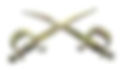
DRESS AND ACCOUTREMENTS. The crossed sabres insignia was originally a cavalry badge for swordsmanship. Because they also taught swordsmanship, the badge was adopted by the British Army Gymnastics Staff and worn during the First World War Instructors of the British Army Gymnastic School and the Canadian Bayonet Fighting and Physical Training School wore the sabres with a crown mounted above the blades as a hat badge (See Billy Adkins' hat badge shown earlier) and as a qualification insignia on
their battle dress sleeve. Unit instructors wore the plain crossed sabres badge without a
crown, on the sleeve of their regimental battle dress uniform.
Unit Instructors

School Staff
From 1946 to 1954 Army PTIs wore the regular uniform of their corps/regiment. Brass crossed sabres shown above, were authorized for wear above their rank insignia. In place of a great coat, duffle coats were authorized. Environmental dress consisted of white singlets, dark trousers, broad heavy canvas belt with leather and metal buckling apparatus (positioned over left hip) and gray socks with white, black-soled running shoes. In 1952 the black-soled shoes were replaced with all white shoes.
Army officers employed with the PT Wing RCS of I, the PT Cadre and the PT Staff (RCIC) continued to belong to their respective corps/regiments and did not wear the PTS accoutrements; however, during 1954-58 officers and WO1s at the PT Wing followed the British Army tradition of wearing gray flannels and blue blazers with PT Crossed swords as their normal working dress with white trousers and white sweater and PT crest when on the Gym floor.
With the formation of the PT Cadre in 1954, Army PTIs continued to wear the normal regular uniform of their corps/regiment and were authorized to wear the following newdistinctive cloth qualifying trade badges introduced in 1956:
Gp 4 Gp3 Gp 2 AI

In addition, upon qualifying as Gp 3 Tradesmen, Army PTIs were entitled to wear cloth or brass crossed swords above their rank insignia on all orders of uniform. Distinctive Environmental Dress (DEU) for Army PTIs consisted of white singlets with red trim around the neck and shoulders, blue trousers, white elastic belt and gray socks with white running shoes or black boots or black ankle shoes. White shorts and white sweaters could be worn as optional items of the environmental dress.

A cloth PTI badge in the form of a red shield with gold trim reflecting the trade qualification as shown on the trade badges above was authorized to be worn on the PT singlet and sweater. A sample of the Group 2 badge is shown at right.

In the mid 1960s the red shield was replaced by a red maple leaf with a gold trim (shown at right); other features of the PT badge remained the same as stated above.


When the PTS (RCIC) was established in 1963 all NCO PTIs were transferred to the PTS (RCIC) and wore the distinctive shoulder flashes, existing trade badges and other accoutrements which featured the new Brass Corps Badge also shown at left
CONCLUSION. In addition to the conduct of fitness training all Army PTIs were required to teach basic skills and officiate a great variety of games and sports. Many were outstanding athletes and nationally-or provincially accredited officials in two or more sports. Capt John Gillanders, WO1 (SM1) Terry Weatherall, and SSgt Dennis Bradley were internationally recognized boxing officials. In his later years, MWO Bradley was a prominent boxing referee at two Olympic Games, 1976 in Montreal and 1980 in Moscow. A number of Army PTIs excelled in the boxing world, eg, “Babe” Mason, Mike Mercredi, Harvie Reti, Harry Warren, and Tom Chesson. “Tiger” Warren boxed as a professional in Canada and in the U.S.A. The national and international accomplishments of Mason, Reti, and Chesson earned them induction into the CF Sports Hall of Fame. During the late 1950’s and early 1960’s PT Cadre/PTS (RCIC) personnel were among the best-qualified track and field officials in the country and performed in this capacity in key positions at many national and international meets, eg, the 1959 Pan-Am Trials in Winnipeg, the 1959 Pan-American Games in Chicago, the 1962 BE Games Trials in Toronto, the 1967 Pan-Am Trials in Saskatoon and the 1967 Pan American Games in Winnipeg, to mention a few. During the same period, Sgt Charlie Abbs of the PTS (RCIC) attained prominence as a decathlon athlete of national caliber. The contribution of the Army Gymnastics Display Team to the promotion of good public relations and to the enhancement of the PTS (RCIC) Instructor’s image was described earlier in this chapter. However, the following are also worthy of note for their accomplishments as gymnasts: Ken MacDonald, George Lilly, Jack Savage, Gerry Lindner, Tom Goodison and Willie Weiler. The Army Gymnastic Team of MacDonald, Lindner and Weiler won the Canadian National Team Championships in 1959. Willie Weiler’s accomplishments as the “All-Round Champion” at the 1963 Pan American Games in Brazil (4 gold, 3 silver, and 1 bronze medal) and as the coach of the 1968 Canadian Olympic Team in Mexico, earned him the Order of Canada and induction into the CF Sports Hall of Fame.